
Hiring teams face an abundance of applicants but limited time to process them.
Roles attract hundreds of resumes, yet recruiters still struggle to assemble credible shortlists. Hiring managers disengage after early interviews. Time-to-fill stretches even as posting activity increases. The real constraint is the amount of unproductive work between posting a role and making a hire.
Career pages perform better under these conditions by reducing unnecessary work earlier in the process.
Table of Contents
What Conversion Data Reveals About Career Pages
The most consistent performance difference between career pages and job boards appears in applicant yield.
CareerPlug’s 2024 Recruiting Metrics Report shows that employer career pages generated approximately 12% of total applicants while producing 23% of hires across industries.
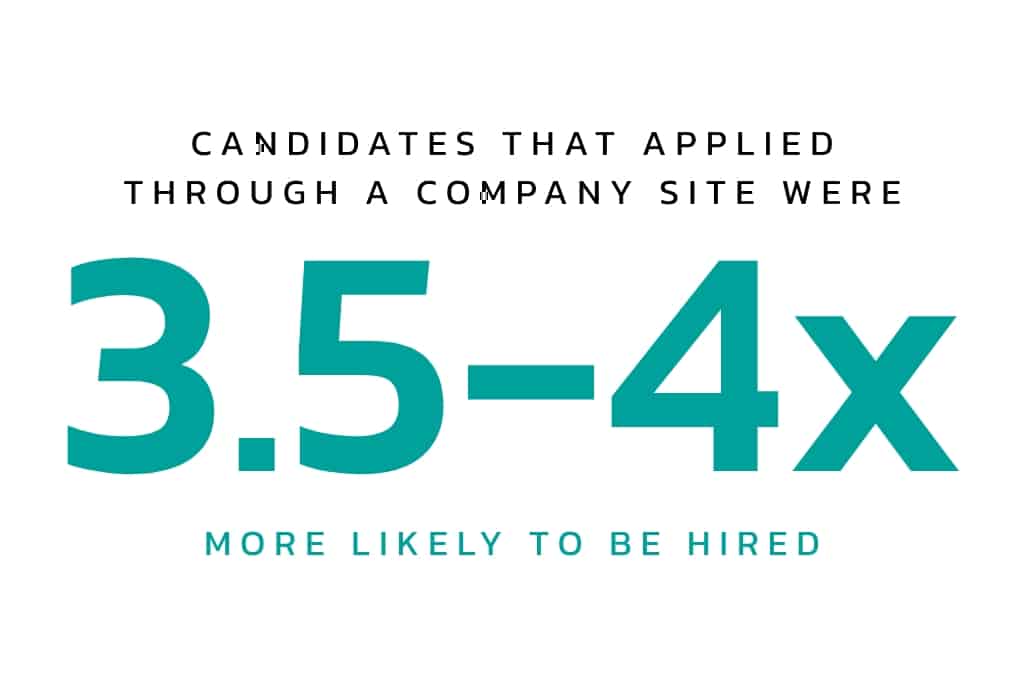
A separate dataset covering similar time periods reported nearly identical results. Career pages accounted for about 13% of applicants and 24% of hires, which means candidates who applied through a company’s own site were roughly 3.5 to 4 times more likely to be hired than those sourced from job boards.
These numbers point to a conversion gap rather than a reach advantage.
Why Career Page Applicants Progress Further
Candidates who apply through a career page usually spend time reviewing company information, role context, and expectations before submitting an application. That behavior filters out many low-fit candidates before recruiters engage.
Job boards encourage faster application behavior driven primarily by titles and locations. Recruiters experience the downstream effect as higher resume volume paired with lower interview readiness.
Career page applicants tend to arrive with clearer expectations, which shortens early interview cycles and reduces clarification work during screening.
Clear Expectations Reduce Rework
Career pages give employers space to explain role constraints directly. Reporting structure, work environment, compensation ranges, and advancement limits can be presented without compression.
When those details are visible, candidates who disagree with them often exit before applying. This reduces late-stage drop-off, declined offers, and stalled searches that quietly increase recruiting effort.
Standardized job board templates limit this level of clarity and push expectation-setting later in the process.
How Conversion Affects Cost Per Hire
High applicant volume increases screening workload faster than hiring output. Each resume requires review time, coordination, and rejection handling. As applicant-to-hire ratios worsen, these costs multiply.
Career pages change that ratio. Stronger conversion means fewer interviews per hire and less time reopening searches that fail to close.
Cost per hire falls as recruiting teams spend fewer hours reviewing, interviewing, and restarting roles that attract low-intent applicants.
Candidate Research Behavior Explains the Pattern
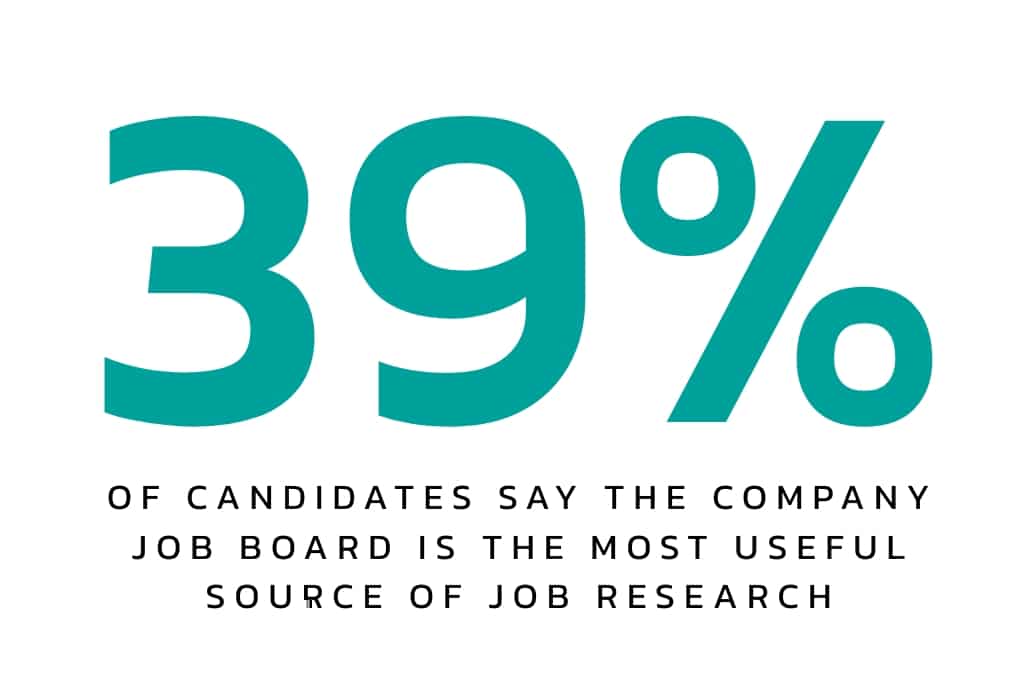
JobScore reports that 54% of candidates research companies before applying, and 39% consider the employer’s career site the most useful source during that research process.
Many candidates encounter roles on job boards and then decide whether to apply after reviewing the employer’s site. When the career page lacks clarity or credibility, paid traffic does not convert.
From an operational perspective, spending occurs early while decisions happen later.
Where Job Boards Still Make Sense
Job boards remain effective in specific situations. Rapid hiring surges, roles with limited organic search demand, and geographic expansion often require paid reach.
Problems emerge when boards become the default channel rather than a tactical supplement. At that point, recruiting budgets remain tied to visibility that expires instead of assets that improve hiring efficiency over time.
Career Pages as Hiring Infrastructure
Well-built career pages function as diagnostic tools. They reveal where candidates disengage, which roles attract serious interest, and which requirements suppress completion.
Effective career sites track application drop-off, conversion by role, and performance by department. This visibility allows teams to fix specific breakdowns such as overly long forms or misaligned role descriptions.
Repeat Interest Reduces Future Sourcing Effort
Career pages also capture candidates who are interested but not ready to apply. Repeat visits, job alerts, and bookmarked roles signal intent that often converts later.
When these candidates apply, they typically move faster through interviews because familiarity reduces uncertainty. This shortens future hiring cycles without additional sourcing spending.
The Budget Question Hiring Leaders Should Ask
The practical question is how much emphasis career pages should carry within the overall recruiting budget. Channels that must be repurchased every month deliver visibility but little retained value. Career pages reduce wasted effort by improving applicant quality and conversion over time.
Closing Perspective
Career pages outperform job boards because they reduce unnecessary work earlier in the hiring process. Fewer candidates enter, and more of them meet baseline expectations.
When 12–13% of applicants generate nearly a quarter of hires, the effect shows up in screening workload, interview efficiency, and time-to-fill. Recruiting teams that continue to optimize primarily for visibility will keep paying for volume they cannot effectively process.
If you’re considering implementing a careers page for your business, talk to the experts at WorkRocket. Through our partners at CareerCopia, we’re able to provide your business with a careers page that will improve your employer branding and the conversions of your job postings. Reach out today!
